

Overview
- Embedded referral UI: Cello’s Referral Component integrates natively in your app (web/mobile) with automatic theming and a launcher.
- Widget/portal model: Advocate provides widgets (
squatch.js,<squatch-embed>), which are external elements styled separately or surfaced via a portal.
Integration and UX embedding
Example
Open Cello’s referral panel from a menu item; keep users in‑app with a cohesive look and feel. Widgets typically need extra work to match your design system.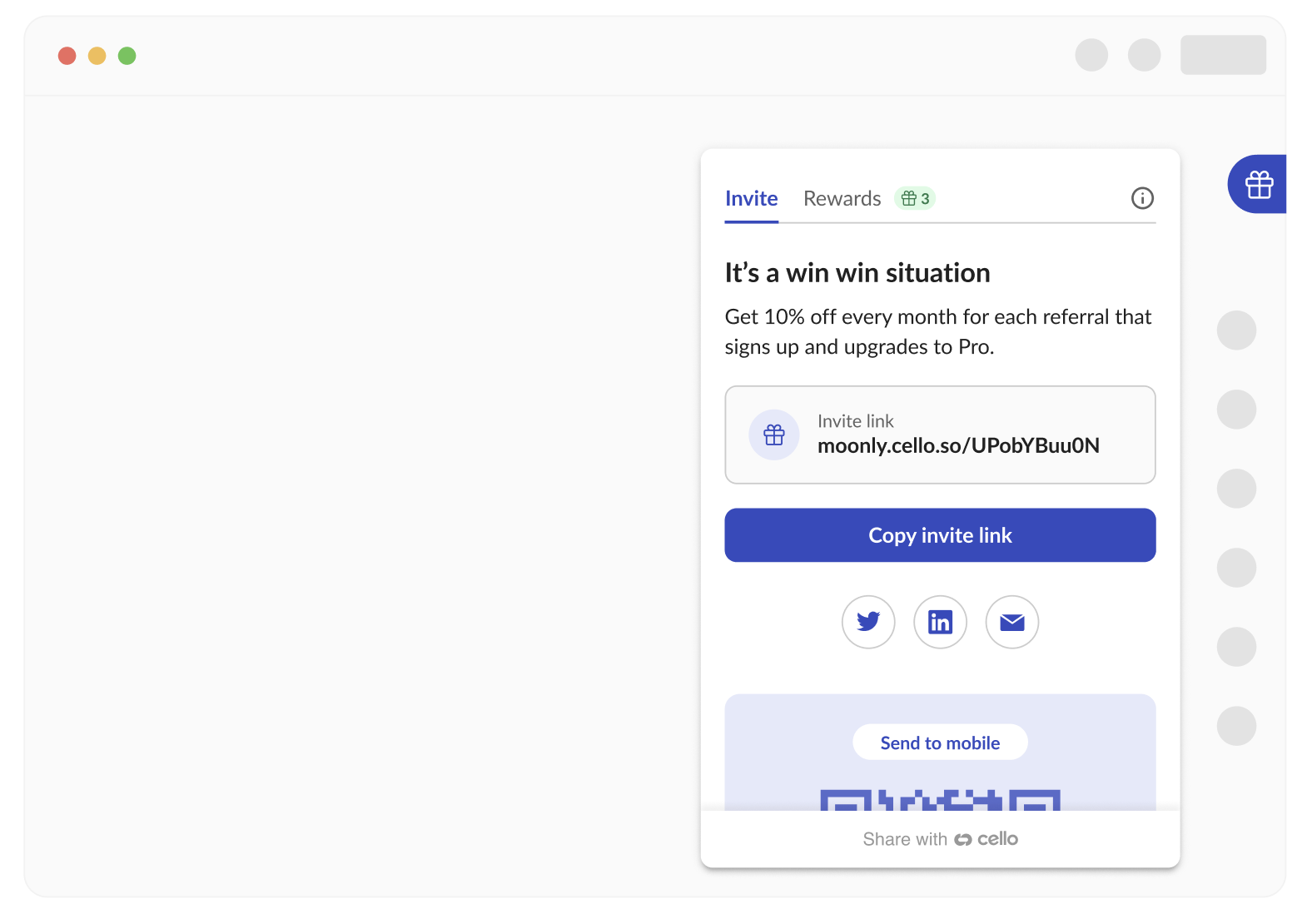
Notifications and engagement
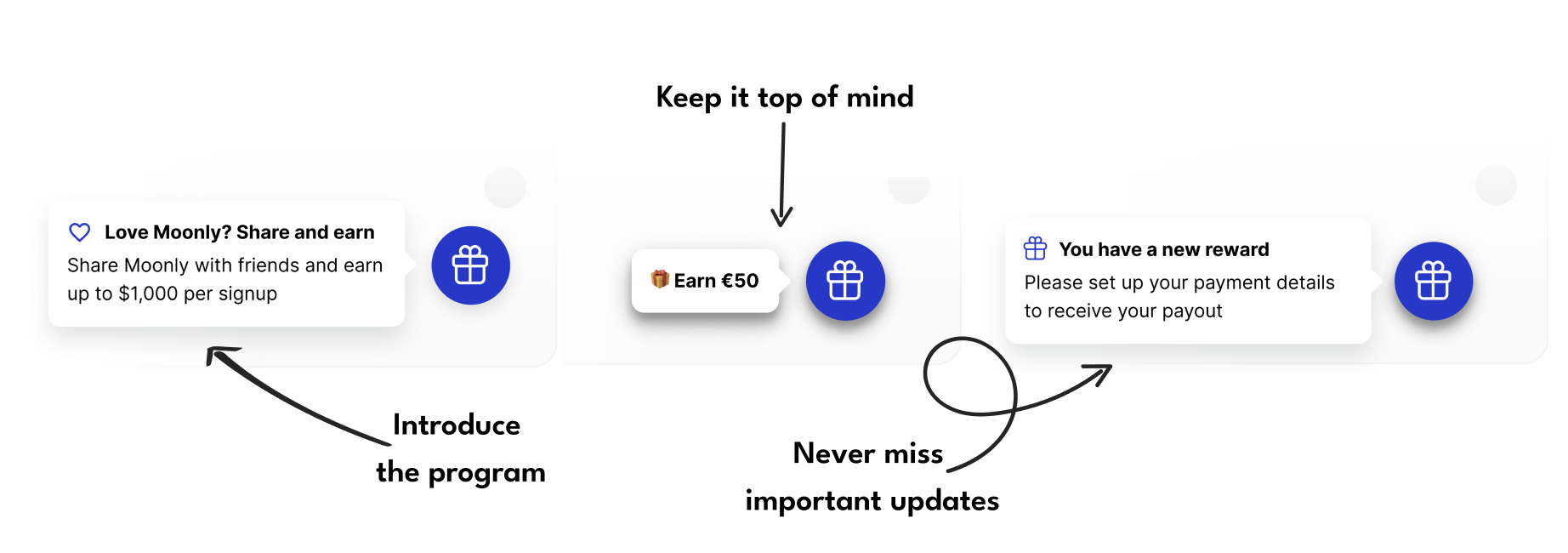
Cello includes an in‑app and email notification system for referral programs:- In‑app alerts and badges for important moments like reward earned.
- Announcements (callouts) to prompt next actions, such as adding payout details.
- Email lifecycle notifications (welcome, first share, reward earned, unclaimed reminders).
- Behavior‑based timing to coordinate in‑app and email touchpoints.
 Advocate provides event webhooks and email templates but no native in‑app notification layer. Teams typically build in‑app nudges with other systems, requiring additional development effort.
Mobile SDKs
Attribution: client vs server flow
Campaigns, rewards, and payouts
Campaign design and reward rules
Payout management
Recurring rewards and multi‑month commissions
Summary: key differences
- Embedded UI vs widgets/portal: Cello is native in‑app; Advocate relies on widgets and portals.
- Engagement: Cello provides in‑app + email journeys; Advocate requires external tooling for in‑app nudges.
- Attribution: Cello is server‑first via Stripe metadata; Advocate defaults to client/cookie tracking.
- Campaigns: Cello composes multiple reward types in one campaign; Advocate often splits across programs.
- Payouts: Cello automates payouts inside your product; Advocate integrates with providers or uses manual flows.
- Mobile SDKs: Both provide native iOS/Android SDKs; Cello includes a plug‑and‑play component and platform payout automation, while Advocate’s SDK is hybrid (server APIs) and does not support payment‑provider programs.