The Cello MCP server uses OAuth. When you connect, your client opens a browser window to sign in to Cello and authorize access. There’s no token to generate or paste, and your client refreshes the connection automatically.
https://mcp.cello.so/mcp
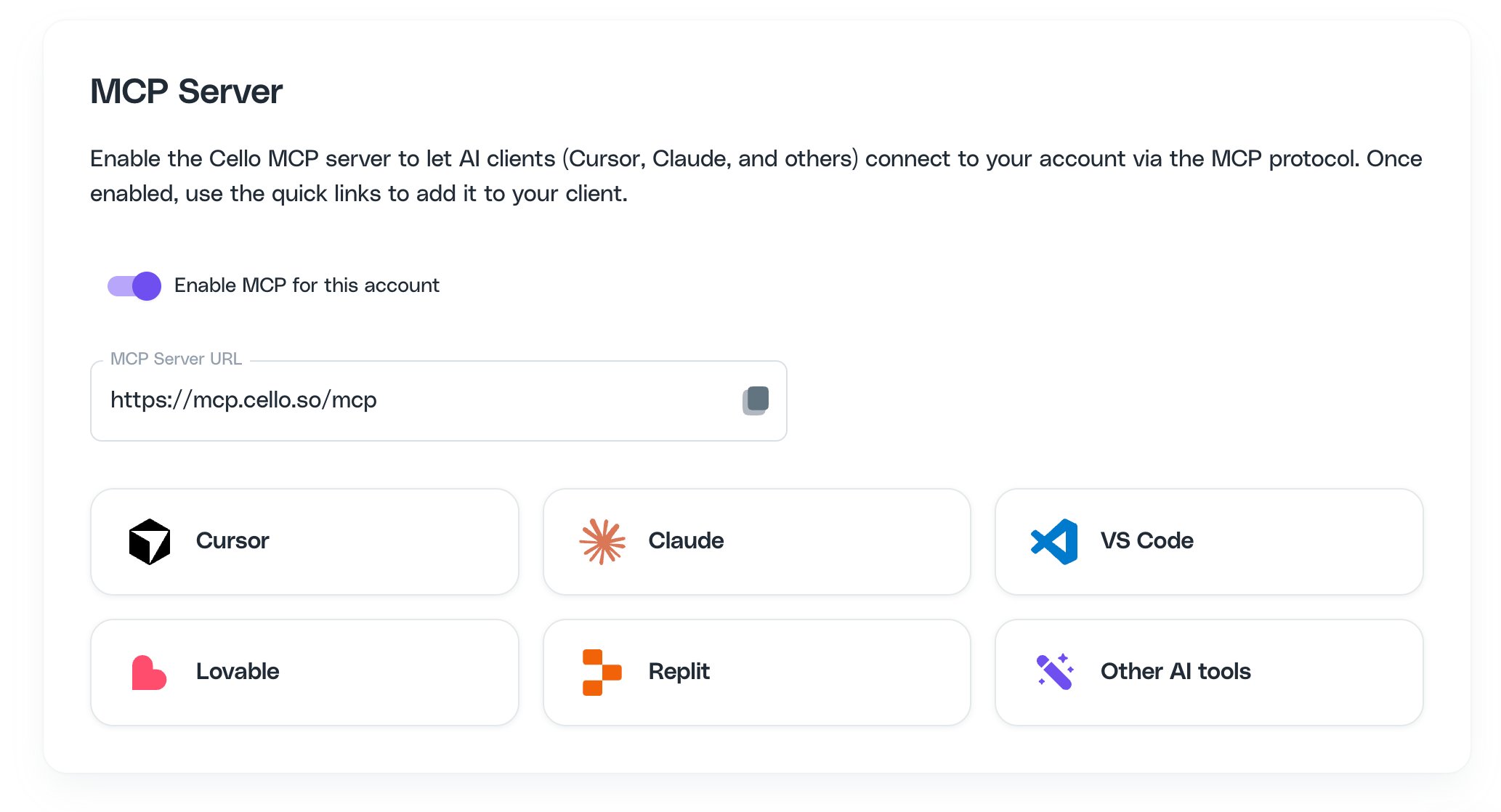
Make sure MCP is enabled for your account and grab your MCP Server URL first. The examples above use the Production URL; swap in your Sandbox URL (https://mcp.sandbox.cello.so/mcp) if connecting a test account.Cello Portal MCP Server page showing the Enable MCP toggle, the MCP Server URL field, and quick-add cards for Cursor, Claude, VS Code, Lovable, Replit, and Other AI tools
Claude

Connect Cello to the Claude desktop or web app as a custom connector. (For the Claude Code CLI, see Claude Code below.)
  1. Go to Settings → Connectors
  2. Click Add custom connector
  3. Enter the following:
    • Name: Cello
    • Remote MCP server URL: https://mcp.cello.so/mcp
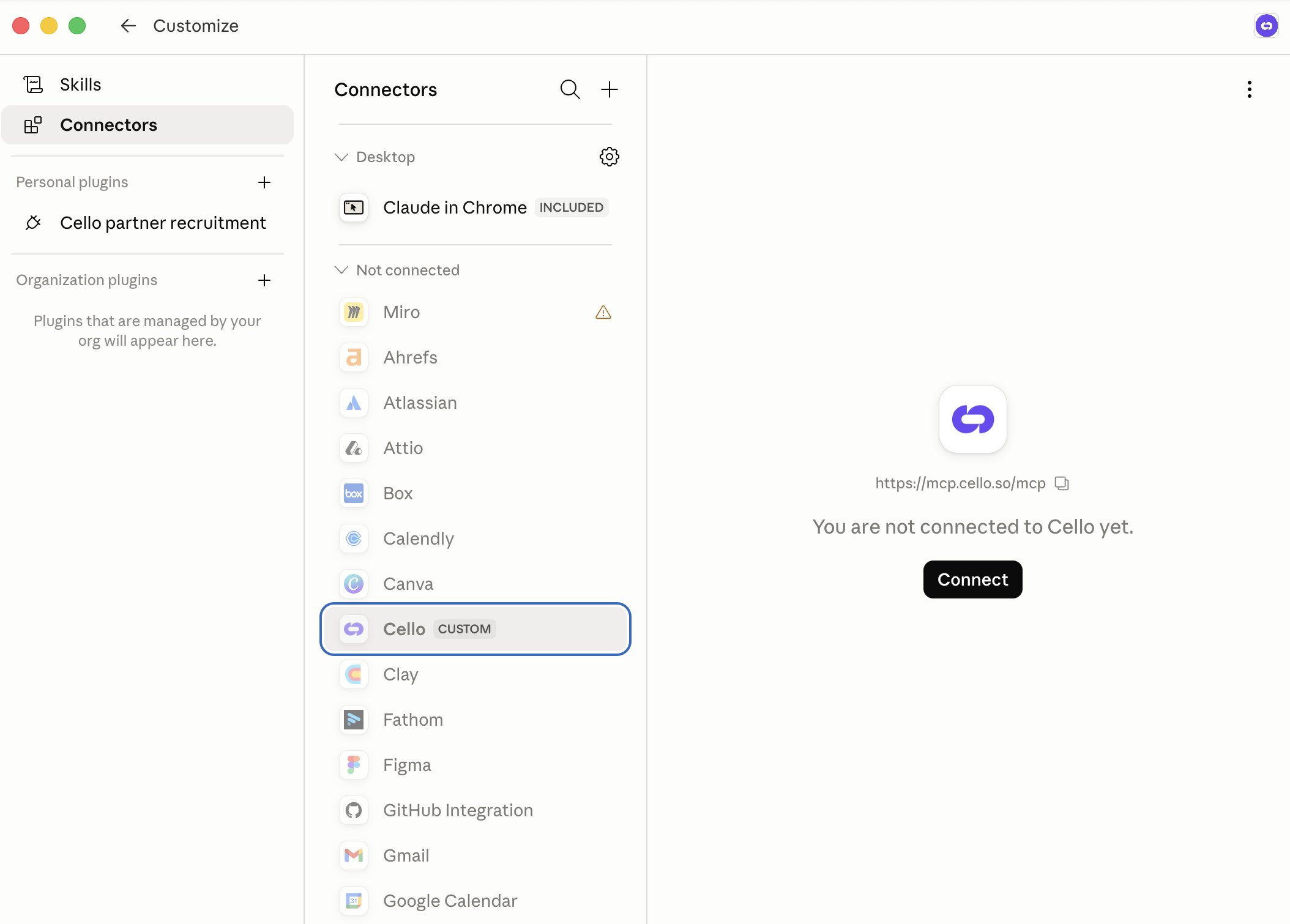
  4. Click Add, then Connect.
Claude Settings → Connectors showing Cello as a custom connector with a Connect button
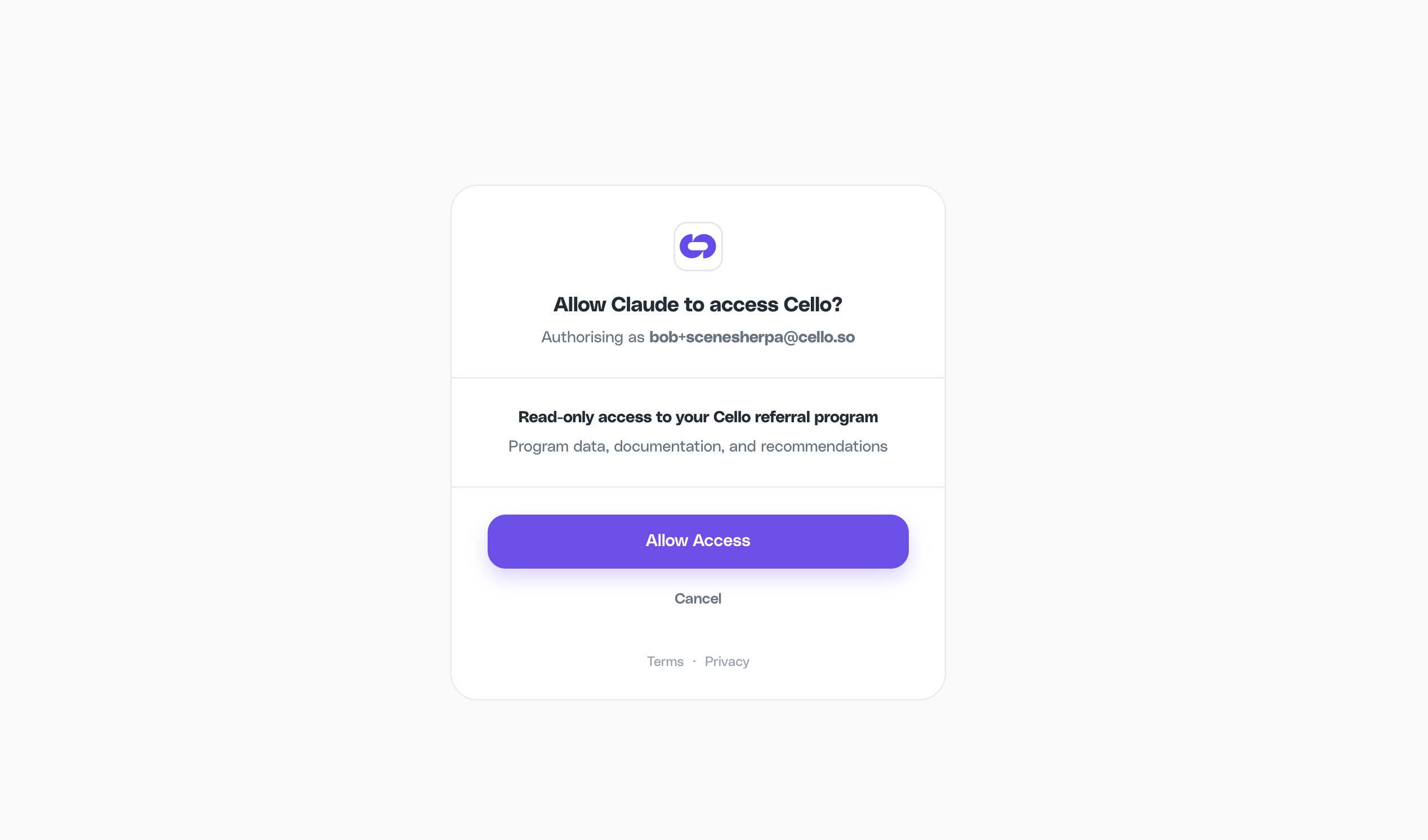
A browser window opens to authorize access to your Cello account.
OAuth authorization dialog asking to allow Claude to access Cello
Once connected, the Cello tools appear in the chat and Claude uses them automatically.
On Team, Enterprise, and Edu plans, an admin may need to add Cello as an organization connector first via Settings → Connectors → Organization plugins before members can connect.

Claude Code

1

Add the server

Run the following in your terminal:
claude mcp add --transport http Cello https://mcp.cello.so/mcp
Swap in the Sandbox URL (https://mcp.sandbox.cello.so/mcp) if you’re connecting a test account.
2

Authenticate with Cello

Run /mcp inside Claude Code, select Cello, and choose Authenticate. A browser window opens for you to sign in to Cello and authorize access. Claude Code stores and refreshes the connection for you - there’s no token to manage.
3

Verify the connection

Run /mcp again. Cello should show as connected with its tools listed. Try a prompt like “Use Cello to check my integration status.”

Cursor

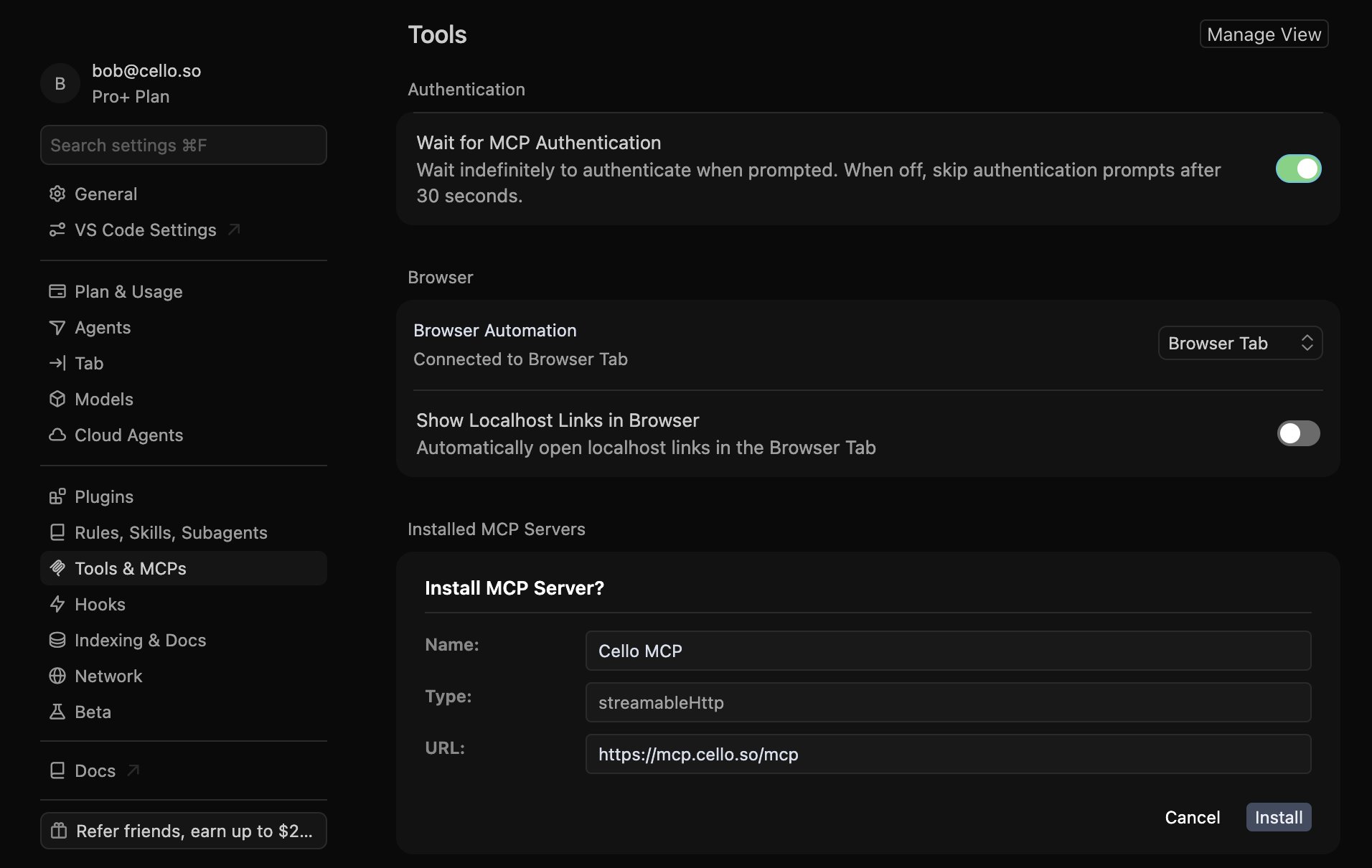
The quickest way is to click Cursor directly from the MCP Server page in the Cello Portal — it adds the server to Cursor automatically. Or add it manually: go to Cursor Settings → Tools & Integrations → MCP Servers → Add Server and enter the server URL. When Cursor connects, it opens a browser window to sign in to Cello and authorize access.
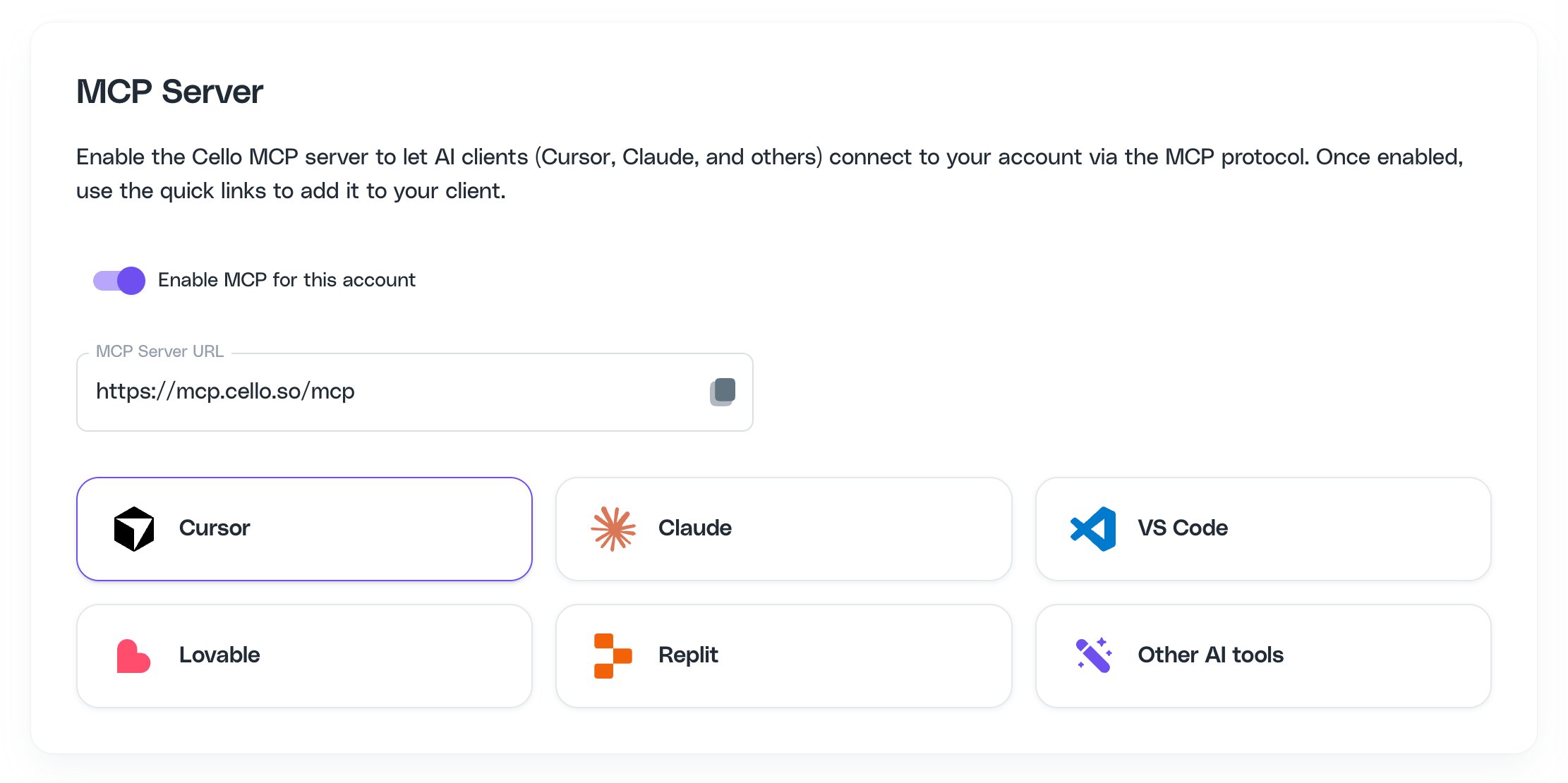
Cello Portal MCP Server page with the Cursor quick-add card highlighted
Cursor Install MCP Server dialog showing Name as Cello MCP, Type as streamableHttp, and the Cello server URL
Or configure manually by editing ~/.cursor/config/mcp.json (macOS/Linux) or %USERPROFILE%\.cursor\config\mcp.json (Windows):
{
  "mcpServers": {
    "Cello": {
      "url": "https://mcp.cello.so/mcp"
    }
  }
}
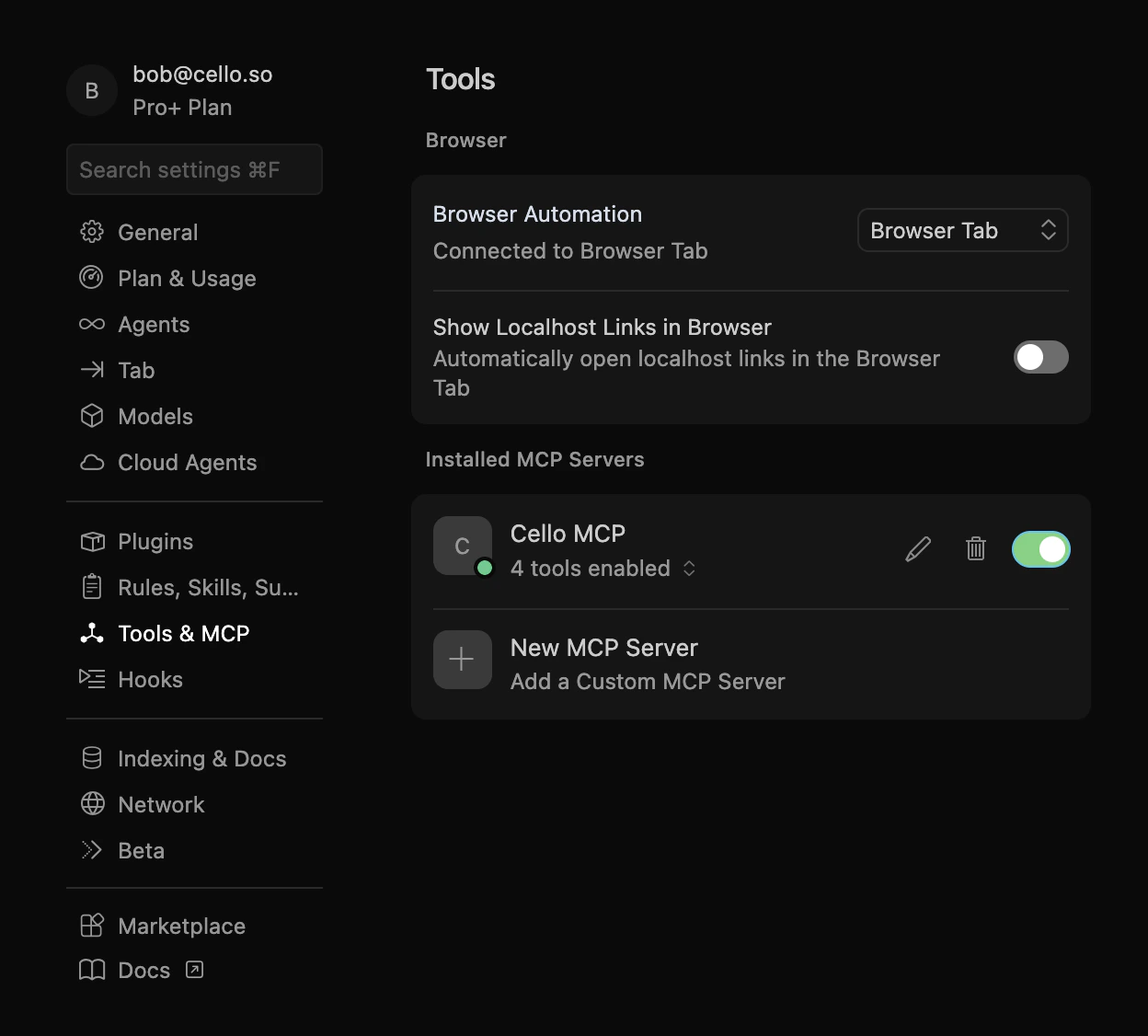
After adding the server, Cursor prompts you to sign in. Once authorized, you should see the Cello MCP server listed with the Cello tools enabled.
Cursor Tools & MCP settings showing the Cello MCP connected with its tools enabled

VS Code (Copilot)

Create or edit .vscode/mcp.json in your workspace (or use MCP: Add Server from the Command Palette):
{
  "servers": {
    "Cello": {
      "type": "http",
      "url": "https://mcp.cello.so/mcp"
    }
  }
}
When VS Code connects, it opens a browser window to sign in to Cello and authorize access.
Windsurf

  1. Go to Settings → MCP
  2. Click Add Server
  3. Enter the server URL: https://mcp.cello.so/mcp
  4. Windsurf opens a browser window to sign in to Cello and authorize access.

Lovable

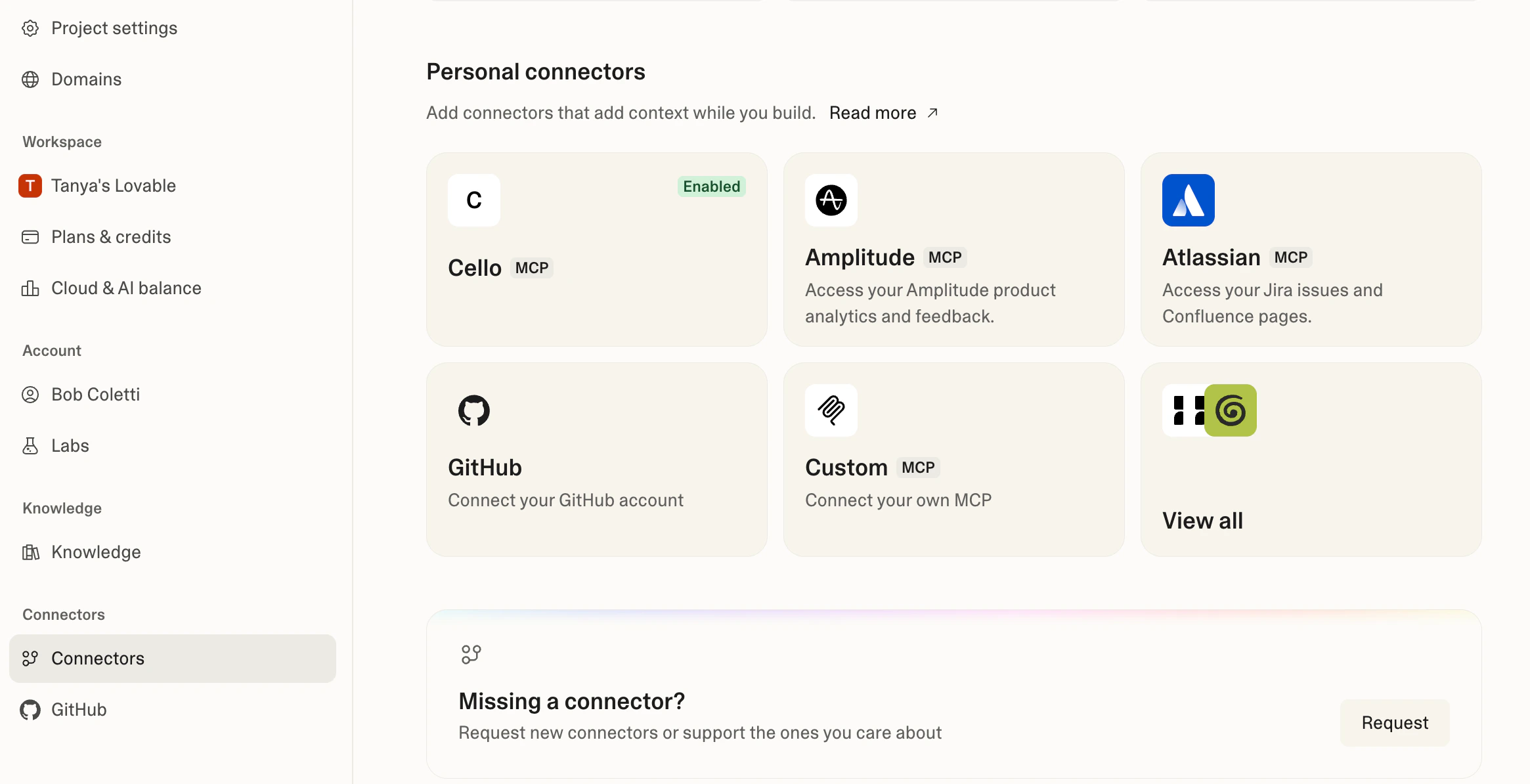
Add the Cello MCP as a custom personal connector in Lovable:
  1. In Lovable, go to Settings → Connectors → Personal connectors
  2. Click New MCP server
  3. Enter the following:
    • Server name: Cello
    • Server URL: https://mcp.cello.so/mcp
    • Authentication: Select OAuth
  4. Click Add & authorize. A browser window opens for you to sign in to Cello and authorize access.
The Cello connector appears in your list of personal connectors.
Lovable Settings showing Cello as an enabled MCP personal connector
For a complete walkthrough of using the Cello MCP with Lovable to build a referral integration, see the Cello + Lovable integration guide. For more details on custom MCP servers in Lovable, see the Lovable MCP documentation.

Other MCP clients

Any tool that supports MCP can connect to the Cello MCP server. Add the following to your client’s MCP configuration:
  • Server URL: https://mcp.cello.so/mcp
  • Authentication: OAuth - sign in to Cello in the browser window your client opens
After adding the server, complete the browser sign-in to authorize access, then restart your application if your client requires it.

Troubleshooting

IssueSolution
Connection failsRe-run the authorization flow from your client to sign in to Cello again. Make sure you’re signing in to the account that matches the server URL’s environment (Production vs Sandbox).
Tools return authentication errorsDisconnect and reconnect the server to refresh authorization. Check that MCP is enabled for your account in the portal (Integrations → MCP).
You don’t see the tools you expectThe available tools depend on your Cello role. If you expect developer or growth tools and don’t see them, contact your Customer Success Manager.
cello_get_integration_status shows notConnectedFollow the relevant integration guide for the disconnected component. Use search_cello to find the setup docs.
Events show validation warningsUse cello_get_events to inspect the payload and identify missing or malformed fields (ucc, productUserId, customerId).
Data or recommendations look out of dateMost data is live; config-based recommendations reflect the current setup, while CRM-derived recommendations may have a slight delay.

Need help?

If you get stuck, reach out to your Customer Success Manager or contact support at support@cello.so.