> ## Documentation Index
> Fetch the complete documentation index at: https://docs.cello.so/llms.txt
> Use this file to discover all available pages before exploring further.
# Cello vs. PartnerStack
> Compare Cello and PartnerStack for referrals: embedded UI vs external portal, server vs client tracking, notifications, campaign rules, payouts, and trade‑offs.
If you're evaluating **Cello vs PartnerStack** for referral programs, this guide summarizes integration effort, attribution reliability, in‑app experience, notifications, campaigns, and payouts to inform your choice.
**Cello** embeds a native referral panel with server‑side attribution and in‑app + email journeys. **PartnerStack** focuses on a broad partner portal and JS SDK; users typically manage links and payouts on an external dashboard.
## Overview
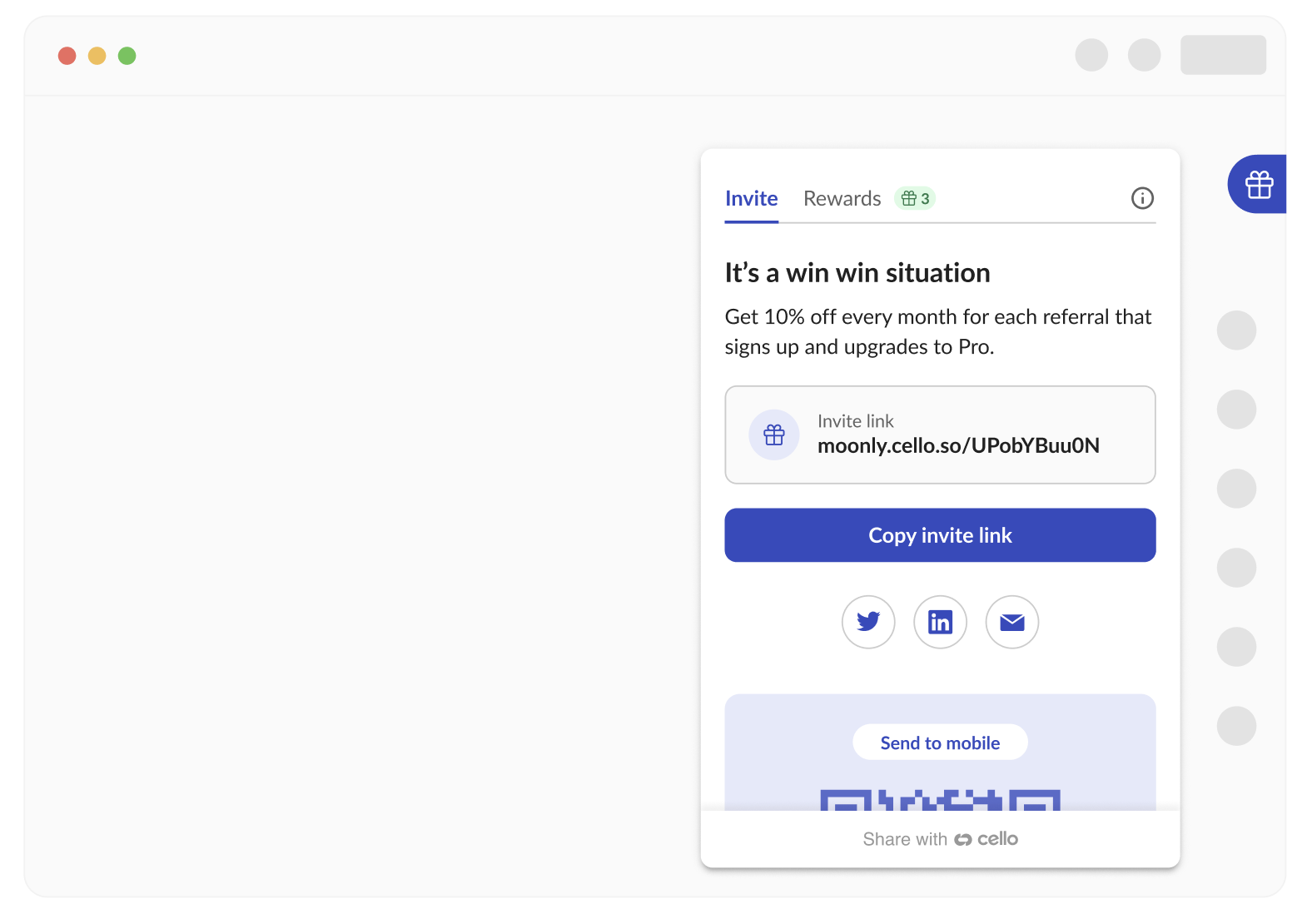
* **In‑product referral UI**: Cello’s Referral Component lives inside your app; users can copy links, view stats, and manage rewards without leaving.
* **Portal‑centric model**: PartnerStack centers on an external portal and SDK; in‑app referral UI is minimal and often redirects to PartnerStack.
## Integration and UX embedding
| **Topic** | **Cello** | **PartnerStack** |
| ------------------------------- | -------------------------------------------------------------------------------------------------------------------------------------------- | -------------------------------------------------------------------------------------------------------------------------------------------------- |
| **Referral UI embedding** | Embedded referral panel in‑app; shows each user’s link, stats, rewards, fully native to your UX. | JS SDK and simple iFrame form for collecting emails/generating links. No in‑app referral dashboard; users manage referrals on PartnerStack’s site. |
| **Custom launcher / placement** | Flexible launcher: attach panel open to any element (menu item, button). Replace or hide the default floating button for a fully branded UX. | No native launcher concept; teams create custom buttons/links to open forms or redirect to the portal. |
### Example
Open Cello’s panel from an “Invite Friends” button in your app; PartnerStack typically takes users out to an external dashboard for management.
 ### Notifications and engagement
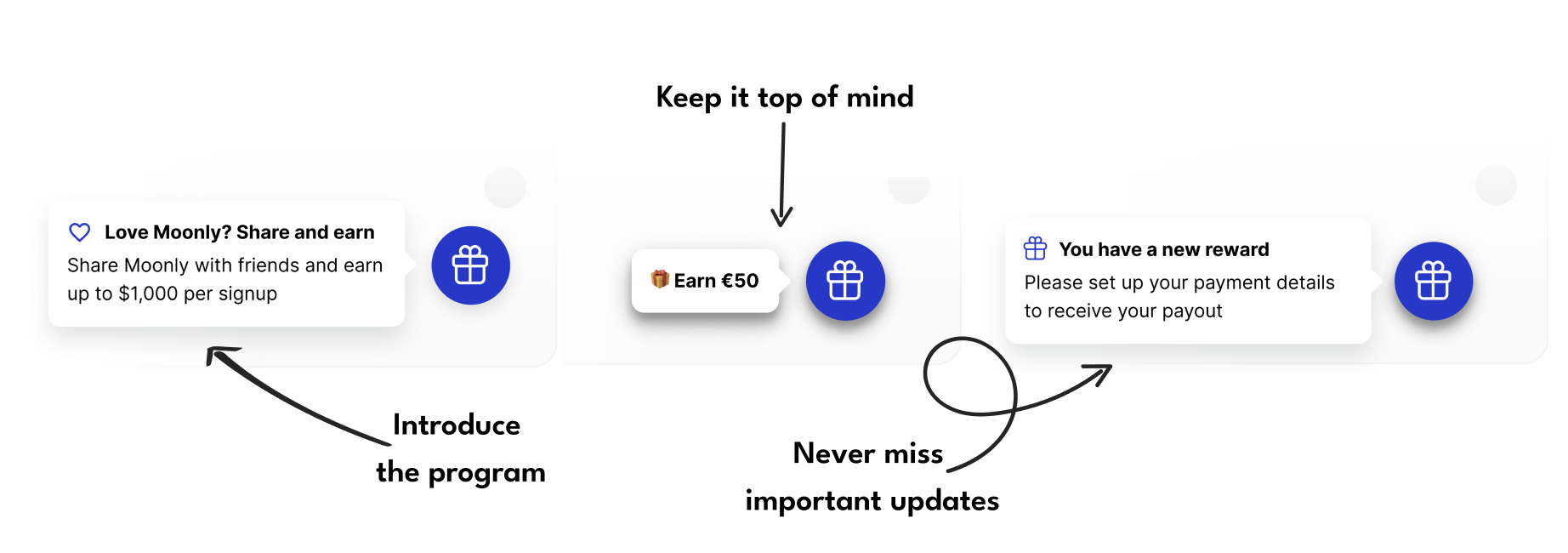
Cello includes an in‑app and email notification system for referral programs:
* **In‑app alerts & badges** for referral joins or rewards earned.
* **Announcements** prompting next steps (e.g., add payout details).
* **Email lifecycle** for welcome, reward earned, and unclaimed reminders.
* **Behavior‑based timing** to coordinate prompts and reminders.
**PartnerStack** does not provide native in‑app notifications. It relies on **webhooks** and external email triggers; custom in‑app messaging requires manual builds, **requiring additional development effort**.
## Mobile SDKs
| **Topic** | **Cello** | **PartnerStack** |
| ----------------------- | ------------------------------------------------------------------------------------------------------------------------------- | ------------------------------------------------------------------------------------------------------------- |
| **Native mobile SDKs** | iOS, Android, React Native SDKs with a plug‑and‑play referral component. | No native mobile SDK; focuses on partner portal, JS tracking, and referral iFrame. |
| **Integration pattern** | Quick install (SPM/CocoaPods/Gradle). Initialize with product ID/user token; supports native share sheets and custom launchers. | Mobile apps embed a portal/iFrame or build custom UI against REST APIs; referrals managed in external portal. |
| **In‑app referral UI** | Embedded mobile panel that is themable and aligns with app UI. | No pre‑built in‑app referral panel; experiences are portal/web‑based. |
| **Payout support** | Platform includes automated payouts via PayPal/Venmo with credit note issuance and VAT handling (outside SDK code). | Payouts managed via PartnerStack portal on monthly cycles; not inside your app. |
If you need native iOS/Android referral experiences, Cello’s SDKs provide the in‑app component. PartnerStack is portal‑centric and requires custom app work or redirects.
## Attribution: client vs server flow
| **Topic** | **Cello** | **PartnerStack** |
| --------------------- | ---------------------------------------------------------------------------------------------------------------------- | -------------------------------------------------------------------------------------------------------------------------------------------------------- |
| **Client dependency** | Backend‑centric tracking: attribution on server events (e.g., Stripe webhooks); no cookies or client scripts required. | Client‑centric tracking via JS snippet and cookies; requires a front‑end call to confirm conversions. Missing scripts or blockers can break attribution. |
| **Stripe / metadata** | Server metadata‑based: referral codes stored on Stripe objects; attribution via webhooks. | Cookie & ID matching: matches by email or client IDs, often with delays. Server‑side setup is optional and more complex. |
Server‑first attribution remains reliable across strict privacy environments, mobile apps, and blocked scripts. PartnerStack’s JS flow is browser‑dependent unless hardened with server integrations.
## Campaigns, rewards, and payouts
### Campaign design and reward rules
| Aspect | **Cello** | **PartnerStack** |
| ------------------------ | ------------------------------------------------------------------------------------------ | --------------------------------------------------------------------------------------------------- |
| **Campaign flexibility** | Multiple reward types in one campaign: % commissions, bonuses, caps, and friend discounts. | Managed via Triggers: one reward per trigger; complex logic requires multiple triggers. |
| **Reward types** | Combine % and fixed bonuses, plus new‑user discounts, in a single setup. | Each trigger offers a single flat or % reward; no native friend‑gets‑X incentives in the same flow. |
### Payout management
| Aspect | **Cello** | **PartnerStack** |
| ------------------- | --------------------------------------------------------------------- | ------------------------------------------------------------------ |
| **Fulfillment** | Automated payout calculation and initiation. | Monthly batch payouts via the portal or manual approval. |
| **User Experience** | Referrers choose payout method (e.g., PayPal, Venmo) inside your app. | Users get paid via PartnerStack’s portal, not inside your product. |
| **Workflow** | Real‑time payout updates and in‑app notifications. | External batch payout cycle, disconnected from your UX. |
### Recurring rewards and multi‑month commissions
| Aspect | **Cello** | **PartnerStack** |
| ------------------------- | ------------------------------------------------ | ----------------------------------------------------------- |
| **Recurring commissions** | Native recurring rewards with configurable caps. | Recurring commissions supported; caps require manual setup. |
| **Control** | Built‑in duration and reward caps. | Requires manual review or multi‑trigger management. |
## Summary: key differences
1. **In‑app UI vs portal**: Cello is embedded; PartnerStack is portal‑centric.
2. **Engagement**: Cello provides in‑app + email journeys; PartnerStack relies on external comms.
3. **Attribution**: Cello is server‑first via metadata/webhooks; PartnerStack defaults to client/cookie tracking.
4. **Campaigns**: Cello composes multiple rewards in one campaign; PartnerStack uses single‑reward triggers.
5. **Payouts**: Cello supports in‑app payout flows; PartnerStack manages payouts externally.
6. **Mobile SDKs**: Cello offers native iOS/Android/React Native SDKs with an embedded component; PartnerStack has no native mobile SDK (portal‑centric).
Choose the platform that matches your desired integration model, attribution requirements, and operational ownership.
### Notifications and engagement
Cello includes an in‑app and email notification system for referral programs:
* **In‑app alerts & badges** for referral joins or rewards earned.
* **Announcements** prompting next steps (e.g., add payout details).
* **Email lifecycle** for welcome, reward earned, and unclaimed reminders.
* **Behavior‑based timing** to coordinate prompts and reminders.

**PartnerStack** does not provide native in‑app notifications. It relies on **webhooks** and external email triggers; custom in‑app messaging requires manual builds, **requiring additional development effort**.
## Mobile SDKs
| **Topic** | **Cello** | **PartnerStack** |
| ----------------------- | ------------------------------------------------------------------------------------------------------------------------------- | ------------------------------------------------------------------------------------------------------------- |
| **Native mobile SDKs** | iOS, Android, React Native SDKs with a plug‑and‑play referral component. | No native mobile SDK; focuses on partner portal, JS tracking, and referral iFrame. |
| **Integration pattern** | Quick install (SPM/CocoaPods/Gradle). Initialize with product ID/user token; supports native share sheets and custom launchers. | Mobile apps embed a portal/iFrame or build custom UI against REST APIs; referrals managed in external portal. |
| **In‑app referral UI** | Embedded mobile panel that is themable and aligns with app UI. | No pre‑built in‑app referral panel; experiences are portal/web‑based. |
| **Payout support** | Platform includes automated payouts via PayPal/Venmo with credit note issuance and VAT handling (outside SDK code). | Payouts managed via PartnerStack portal on monthly cycles; not inside your app. |
If you need native iOS/Android referral experiences, Cello’s SDKs provide the in‑app component. PartnerStack is portal‑centric and requires custom app work or redirects.
## Attribution: client vs server flow
| **Topic** | **Cello** | **PartnerStack** |
| --------------------- | ---------------------------------------------------------------------------------------------------------------------- | -------------------------------------------------------------------------------------------------------------------------------------------------------- |
| **Client dependency** | Backend‑centric tracking: attribution on server events (e.g., Stripe webhooks); no cookies or client scripts required. | Client‑centric tracking via JS snippet and cookies; requires a front‑end call to confirm conversions. Missing scripts or blockers can break attribution. |
| **Stripe / metadata** | Server metadata‑based: referral codes stored on Stripe objects; attribution via webhooks. | Cookie & ID matching: matches by email or client IDs, often with delays. Server‑side setup is optional and more complex. |
Server‑first attribution remains reliable across strict privacy environments, mobile apps, and blocked scripts. PartnerStack’s JS flow is browser‑dependent unless hardened with server integrations.
## Campaigns, rewards, and payouts
### Campaign design and reward rules
| Aspect | **Cello** | **PartnerStack** |
| ------------------------ | ------------------------------------------------------------------------------------------ | --------------------------------------------------------------------------------------------------- |
| **Campaign flexibility** | Multiple reward types in one campaign: % commissions, bonuses, caps, and friend discounts. | Managed via Triggers: one reward per trigger; complex logic requires multiple triggers. |
| **Reward types** | Combine % and fixed bonuses, plus new‑user discounts, in a single setup. | Each trigger offers a single flat or % reward; no native friend‑gets‑X incentives in the same flow. |
### Payout management
| Aspect | **Cello** | **PartnerStack** |
| ------------------- | --------------------------------------------------------------------- | ------------------------------------------------------------------ |
| **Fulfillment** | Automated payout calculation and initiation. | Monthly batch payouts via the portal or manual approval. |
| **User Experience** | Referrers choose payout method (e.g., PayPal, Venmo) inside your app. | Users get paid via PartnerStack’s portal, not inside your product. |
| **Workflow** | Real‑time payout updates and in‑app notifications. | External batch payout cycle, disconnected from your UX. |
### Recurring rewards and multi‑month commissions
| Aspect | **Cello** | **PartnerStack** |
| ------------------------- | ------------------------------------------------ | ----------------------------------------------------------- |
| **Recurring commissions** | Native recurring rewards with configurable caps. | Recurring commissions supported; caps require manual setup. |
| **Control** | Built‑in duration and reward caps. | Requires manual review or multi‑trigger management. |
## Summary: key differences
1. **In‑app UI vs portal**: Cello is embedded; PartnerStack is portal‑centric.
2. **Engagement**: Cello provides in‑app + email journeys; PartnerStack relies on external comms.
3. **Attribution**: Cello is server‑first via metadata/webhooks; PartnerStack defaults to client/cookie tracking.
4. **Campaigns**: Cello composes multiple rewards in one campaign; PartnerStack uses single‑reward triggers.
5. **Payouts**: Cello supports in‑app payout flows; PartnerStack manages payouts externally.
6. **Mobile SDKs**: Cello offers native iOS/Android/React Native SDKs with an embedded component; PartnerStack has no native mobile SDK (portal‑centric).
Choose the platform that matches your desired integration model, attribution requirements, and operational ownership.